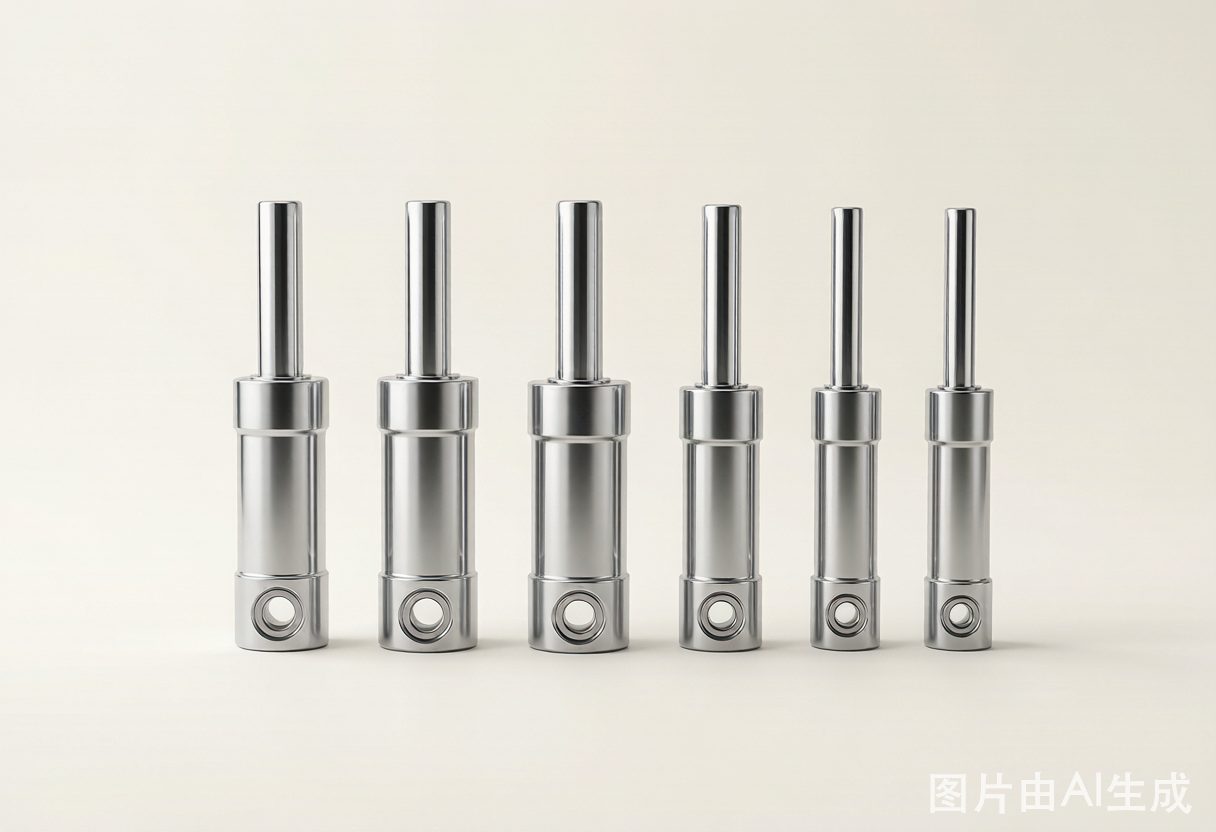
TL;DR: Heil and Dennis Eagle refuse bodies follow different chassis and route conventions, so their cylinders are not interchangeable. Heil-class North American bodies run wider bodies, larger-bore packer cylinders, SAE ports and rod finishes specified against winter road salt; Dennis Eagle-class European bodies run narrow urban bodies with far higher stop density, metric ISO 6149 or DIN ports, and ejector telescopics that must stay stable at partial extension. HCIC builds replacements for both platforms — quoted within 48 hours, minimum order one piece, with a test report and 18-month warranty on every order.
Mixed fleets ask the same question every season: can one cylinder part number serve a Heil rear loader and a Dennis Eagle narrow-body? No — and the reason is engineering, not branding. Cushion profile, port clocking and rod coating never appear on a parts description, yet they decide whether a packer runs quietly for two seasons or hammers its frame within weeks.
Two platforms, two design briefs
Heil bodies dominate North American routes: conventional Class 8 chassis, generous body width, long routes and comparatively few stops per hour. The engineering brief is compaction force — big loads, high-volume containers, and a packer that densifies a mixed stream in one stroke.
Dennis Eagle bodies come out of the European municipal tradition: low-entry cabs, narrow bodies for historic street layouts, kerbside collection with very high stop density. The packer cycles far more often per shift, the ejector discharges in confined bays, and every cylinder lives in a tighter envelope. Neither brief is superior — they simply load the hydraulics differently, which is why a specification drawn from one platform rarely satisfies the other.
What changes by body position
This is the summary our engineers use when a mixed-fleet RFQ arrives — a map of the differences that must be resolved before a replacement can be quoted.
| Body position | Heil-class (North America) | Dennis Eagle-class (Europe) |
|---|---|---|
| Packer / compaction cylinder | Larger bore, high force, cushion tuned to slower full-stroke cycles | Compact bore in a narrow body, cushion tuned to fast short strokes all shift |
| Telescopic ejector | Long stroke, full discharge at transfer stations | Stability at partial extension on sloping ground, discharge in confined bays |
| Lift arm / bin lifter | Shock loads from heavy containers, wide mounting spread | Narrow mounting, high shock frequency, tight clearance |
| Tailgate lock / rear door | Short stroke, must survive freeze-thaw and salt film | Short stroke, tighter access around the rear frame |
| Body hoist | High load, full body raise, documented safety factor | Compact stroke where fitted; load-holding evidence still required |
Packer and ejector cylinders fail first on both platforms — the most cycles in the dirtiest environment — so expect the approval drawing to carry the most detail there.
Port standards: SAE versus metric
Port standard is the most common reason a nominally correct cylinder cannot be installed. North American bodies typically use SAE straight-thread O-ring ports with JIC 37-degree hose ends; European bodies commonly specify ISO 6149 or DIN 2353 metric ports, with BSPP on older units. On a body with almost no routing slack, an adapter is not a neutral fix — it adds a leak point and changes the effective hose length.
Specify the port standard and the clocking together: a correct thread rotated thirty degrees turns a two-hour swap into a fabrication job. Our guides on Heil cylinder replacement, Dennis Eagle and FAUN cylinder replacement and European standards in waste hydraulics show what to photograph before you send the RFQ.
Rod coating and corrosion: two failure environments
The corrosion load differs more than buyers expect. In northern North America, de-icing brine leaves a chloride film on extended rods, and cylinders parked extended over winter pit at the rod surface — the next stroke then destroys the wiper and gland seal. In urban Europe the salt load is lower and the dominant stress is cycle count: frequent washdowns, leachate around the gland, and far more packer cycles per shift.
Rod finish and seal compound are therefore specified per environment, not per part number: HCIC supplies hard-chrome rods as standard and matches seal and wiper compounds to the working fluid and the exposure you describe.
Pressure class and cushioning
Packer circuits run in the upper mobile pressure range, so the replacement must be rated at or above the body relief setting with margin for spikes on a stalled pack. HCIC builds to working pressures up to 31.5 MPa and designs to ISO 6020 / 6022 / 10100, so pressure class is rarely the constraint — cushioning is. Heil-class packers decelerate a heavy blade at the end of a long stroke; Dennis Eagle-class packers engage their cushions far more often and far faster. Copy one profile onto the other and the symptom is immediate: frame hammer, cab noise and cracked welds.
What to verify before you order
Use this checklist for every replacement cylinder, whichever platform the truck belongs to — the same list our engineers work through when they reverse-engineer a sample unit.
| Check | Why it decides fitment |
|---|---|
| Mounting geometry | Pin diameter, hole centers and pin-to-pin lengths must match the brackets with no re-drilling |
| Port standard and clocking | SAE versus ISO 6149 or DIN; a rotated port fouls the packer track |
| Bore, rod and stroke | Set compaction force and cycle time; an undersized rod loses column strength |
| Cushioning profile | Wrong cushions hammer the frame on high-frequency European duties |
| Pressure class | Must meet or exceed the body relief setting, with spike margin |
| Rod finish and seals | Salt film and leachate attack different surfaces; compound must suit the fluid |
| Destination-country requirements | Documentation and marking expectations differ by market |
How HCIC handles a mixed-fleet order
HCIC's OEM replacement program accepts the nameplate part number, the old cylinder for reverse engineering, or your own measurements and drawings, and returns a quotation within 48 hours with an approval drawing before production. Our refuse truck cylinders cover bores from 40 to 630 mm and strokes to 12,000 mm, with a test report on every order.
- Minimum order quantity: one piece — sample and trial orders are welcome.
- Payment: T/T, 30% deposit with order and 70% balance before shipment; sample orders are prepaid in full.
- Lead time: custom-built cylinders typically 25–45 days; standard configurations ship faster, confirmed at quote.
- Quality evidence: approval drawing, test report and 18-month warranty. Designed to ISO 6020 / 6022 / 10100; manufactured to customer drawings and destination-country requirements; CE marking is not applied.
Frequently asked questions
Are Heil and Dennis Eagle refuse truck cylinders interchangeable?
No. The two platforms follow different regional chassis and body conventions, so mounting geometry, port standard, cushioning and duty cycle all differ. A cylinder can share a bore and stroke and still be wrong. Specify the platform, body position and chassis with your RFQ.
Which port standard does my replacement cylinder need — SAE or metric ISO 6149?
North American Heil-class bodies most often use SAE straight-thread O-ring ports with JIC hose ends; European Dennis Eagle-class bodies commonly use ISO 6149 or DIN 2353 metric ports. Send a photo of the port face and hose end so both are matched exactly.
Can HCIC cover a mixed Heil and Dennis Eagle fleet from one supplier?
Yes. HCIC builds replacement cylinders for both fitment families, engineered to ISO 6020 / 6022 / 10100 — bores from 40 to 630 mm, strokes to 12,000 mm, working pressures to 31.5 MPa. Every order ships with a test report and an 18-month warranty.
What are the commercial terms for a replacement cylinder order?
Minimum order is one piece; sample and trial orders are welcome. Payment is T/T, 30% deposit and 70% balance before shipment; samples prepaid in full. Custom-built cylinders typically take 25–45 days; standard items ship faster. Manufactured to customer drawings and destination-country requirements; CE marking is not applied.