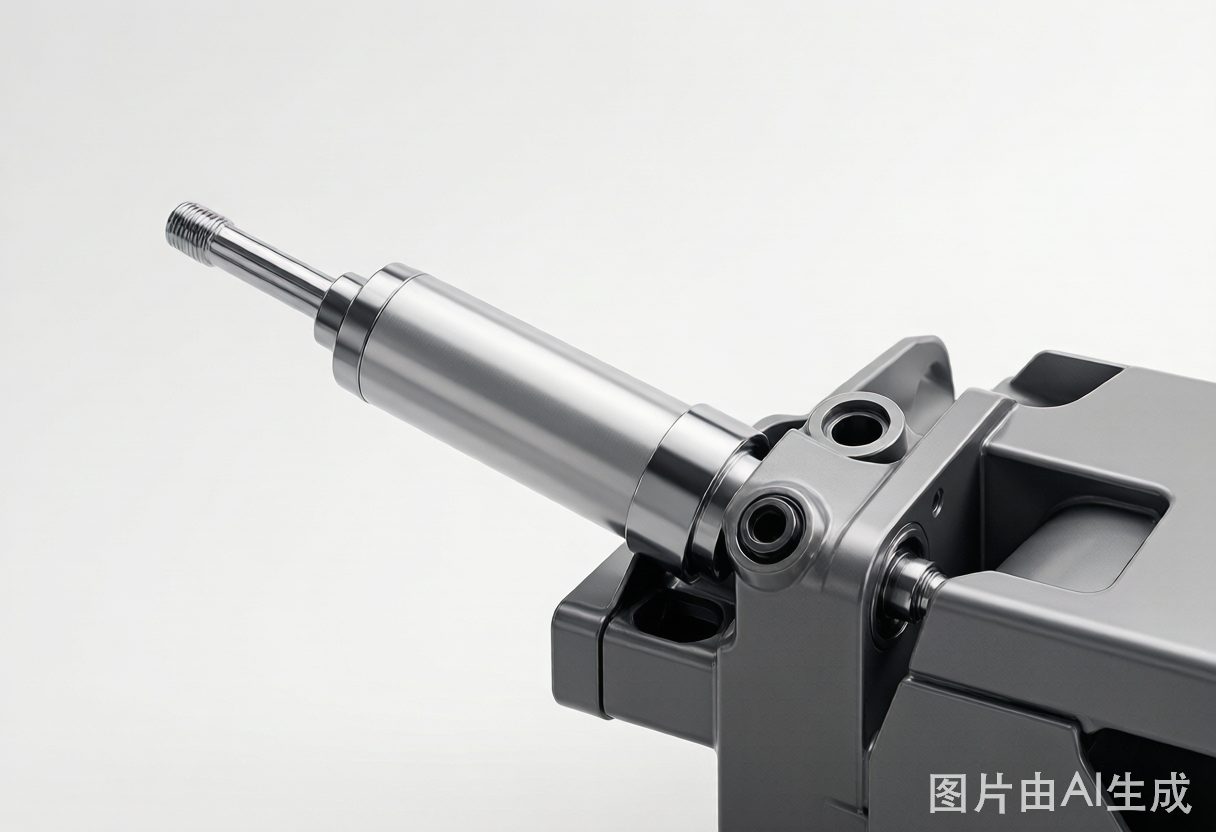
TL;DR — A leaking refuse truck cylinder is rarely a simple reseal job. Whether you rebuild it or replace it comes down to one thing: the condition of the rod and bore, not the leak itself. If the chrome is clean, a seal kit fixes it for a quarter to a third of a new cylinder. If the rod is scored, you are chasing the problem, and replacement is usually the cheaper path once re-chrome and machine time hit the bill.
The leak tells you less than you think
A packer cylinder weeping oil at the rod end tells you a seal has failed. It does not tell you why. That is the trap.
Most shops order a seal kit, drop it in, and hand the truck back. Four months later the same cylinder is leaking again, and now the supervisor is asking whether the shop is any good.
I start every cylinder inspection at the rod, not the gland. The chrome surface is the honest report card.
Read the rod before you order anything
Run your fingernail across the exposed rod. If it comes away clean, you are looking at normal seal wear. If it catches on a groove, a pit, or a rust bloom, the rod is done.
Score lines are the killer. Every one of them is a miniature file that chews the new seal the moment the cylinder strokes. You cannot reseal over a scored rod and expect it to hold.
Side load makes this worse. A packer arm that is slightly out of alignment forces the rod against one side of the gland, and the wear shows up as a crescent on one face of the chrome.
Seal failure modes, in order of what I see
Here is the pattern I have logged across fleet inspections over the years. The first column is what you find on the bench; the second is what it costs to fix properly.
| Failure found | Root cause | Correct fix | Rebuild or replace |
|---|---|---|---|
| Thin weep at the wiper | Normal seal aging | Seal kit, clean rod | Rebuild |
| Scored rod, one side only | Side load, bent mount | New rod + align mount | Borderline |
| Pitted or rust-bloomed rod | Road salt, stone damage | Re-chrome or new rod | Replace |
| Bore damage found at strip | Contaminated oil, wear | New barrel or cylinder | Replace |
| Repeated gland blowout | Over-pressure, wrong relief | Fix relief + new seals | Rebuild |
The rebuild cost, worked out
Say a packer cylinder costs about 900 in OEM terms, and a seal kit is 120. Add three hours of shop labor at 85 an hour and a clean reseal lands near 375, roughly 40 percent of new.
Now score the rod. Re-chroming a 70 mm rod runs 200 to 300 after grinding and straightening, if the shop can even do it in-house. Add a new gland, new seals, and machine time, and you are at 650 to 750.
At that point the rebuild is 70 to 80 percent of a new cylinder with none of the new-part warranty. The economics flip hard, and fast.
The German fleet that kept resealing
A municipal contractor near Cologne ran three refuse trucks on a weekly rural route. One packer cylinder started weeping in November, and their local shop resealed it twice over the winter.
Both times the leak came back within two months. When they finally pulled the rod, it was scored on the lower face from a mounting bracket that had shifted after a minor collision the year before.
They had spent almost the price of a new cylinder on two seal kits and labor, and the truck was still down. A replacement cylinder with a realigned mount fixed it for good.
Three questions that settle the call
Before you buy a seal kit or a new cylinder, answer three things. First, is the rod surface clean and free of scoring? Second, is the bore sound once the cylinder is on the bench? Third, why did the seal fail in the first place?
If the answer to all three is clean, sound, and normal wear, rebuild it. If any one of them is no, replace it and fix the underlying cause, or you will be doing this again in six months.
A quick reference: our refuse truck cylinders are built to ISO 6020 and 6022 and tested before dispatch. If you are chasing a part number, our OEM replacement service cross-references to a drop-in cylinder. And if the failure came from pressure spikes, check the relief setting against the working pressure before anything else.
Frequently asked questions
How do I know if a cylinder needs new seals or a new rod?
Look at the rod, not the leak. If the chrome is clean and the leak is a thin weep at the wiper, a seal kit usually fixes it. If the rod has score lines, pits, or rust blooms deep enough to catch a fingernail, the new seal will fail in weeks; you need a new rod, which usually tips the decision toward a full replacement cylinder.
What does a refuse truck cylinder rebuild cost compared to a new cylinder?
A seal kit rebuild typically runs one-quarter to one-third of a new OEM cylinder, once labor is counted. But that math only holds when the rod and bore are sound. Add a re-chrome, a new rod, and machine time, and the rebuild can reach 70 to 80 percent of a new cylinder, at which point replacement is the better buy.
Why does my packer cylinder leak again a few months after a rebuild?
Usually the rod was scored and was never addressed, or the cylinder was reassembled with a mismatched seal set for the working pressure. If the rod is clean and the leak returns anyway, check the gland alignment and the side load; a bent or misaligned mount will wipe out any seal in short order.
Can HCIC cross-reference and replace a leaking refuse truck cylinder?
Yes. Send the OEM part number or a few measurements, and we cross-reference it to a drop-in replacement built to ISO 6020/6022, tested to the same pressure, with an 18-month warranty. Standard lead time is fast, and we quote within 48 hours.