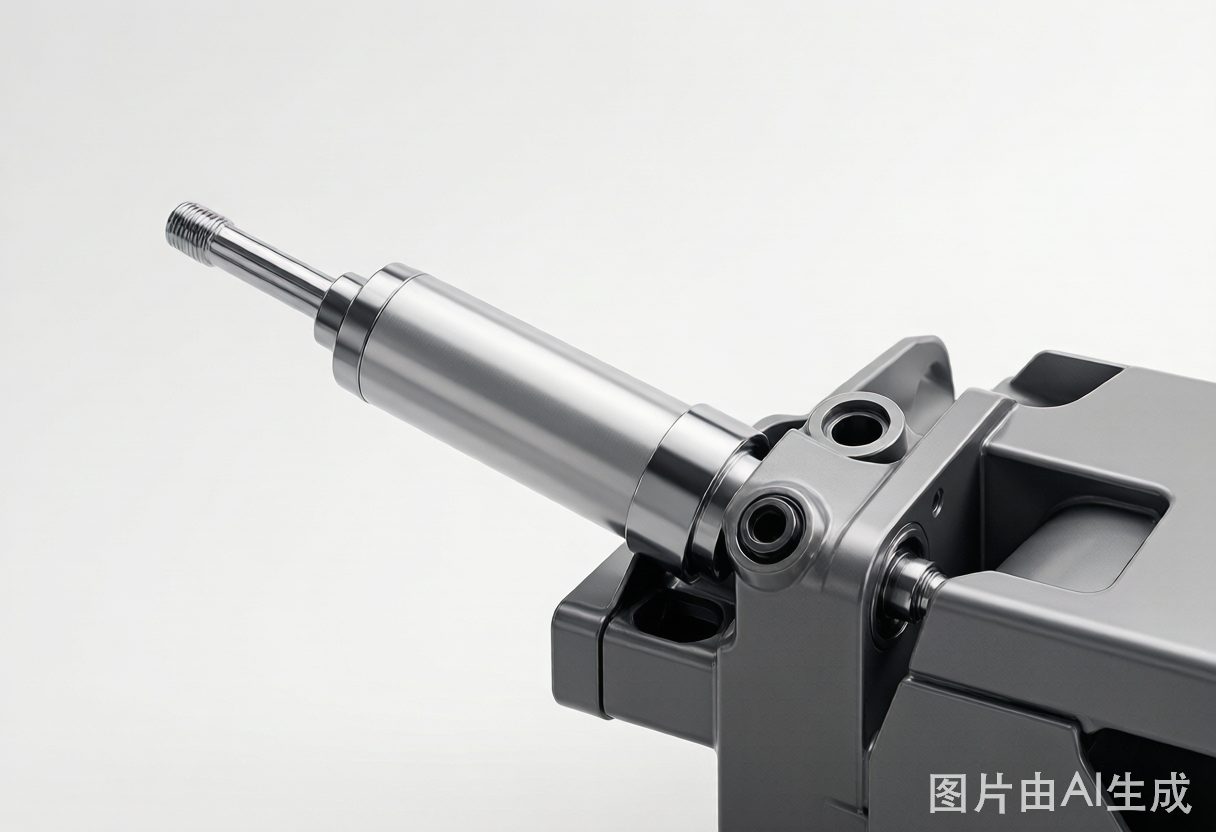
TL;DR — A tailgate that drifts open or an ejector blade that will not hold is almost always a cylinder bleeding internally, not a valve. Cap the ports and push the rod by hand: if it moves, the piston seal is bypassing. Fix it before it locks out a truck or dumps a load, and treat the door as a stop-work fault the moment it stops locking.
The door is the last thing anyone checks
Fleet shops live in the packer, the arms, and the pump. The rear door gets grease if it squeaks and nothing else, right up until it will not latch or the ejector stalls half out.
That is backwards. The tailgate and ejector cylinders cycle less than the packer, but they hold load longer and fail more dangerously when they do go.
I have seen a tailgate drop onto a helper because the lock cylinder had been bleeding for a month and nobody took the drift seriously.
Two cylinders, two very different jobs
The tailgate raise cylinder lifts the door and holds it shut against the packer's push. It is short-stroke, high-load, and it works hardest at the end of the pack cycle, when the body is full and the blade is trying to shove another half a cubic metre out the back.
The ejector push-out cylinder is a long-stroke horizontal cylinder that drives the blade the full length of the body. When its piston seal goes, the blade creeps forward on its own, which loads the door and wears the lock at the same time.
Both fail the same way first: internal bypass. Pressure leaks across the piston seal, the rod can no longer hold, and the load wins.
Failure modes, in the order I see them
Here is what lands on the bench most often, with the test that confirms each one. The last column is the repair that actually holds.
| Symptom | Root cause | Confirming test | Correct fix |
|---|---|---|---|
| Tailgate drifts open when parked | Piston seal bypass | Stall the door, watch for drift | Reseal or replace cylinder |
| Ejector blade creeps forward | Worn piston seal, long stroke | Cap ports, push rod by hand | Reseal or replace cylinder |
| Door will not fully lock | Lock cylinder under pressure | Check relief setting vs spec | Reset relief, inspect seals |
| Wet rod, oil on the bumper | Worn rod seal or scored rod | Fingernail test on the chrome | New seals, or new rod |
| Ejector stalls half out under load | Internal bypass at pressure | Pressure test both ports | Replace cylinder |
The port-cap test splits the job in half
Before you pull a cylinder, cap both ports and push the rod by hand. If it compresses with the ports capped, the leak is inside, across the piston seal, and the cylinder has to come off.
If it holds rock-solid with the ports capped but drifts when it is plumbed in, the leak is upstream. Look at the valve, the relief, or a hose before you blame the cylinder.
It is a two-minute test that has saved me from needlessly stripping a good ejector cylinder more than once.
What a tailgate drop actually costs
A municipal contractor I worked with ran a rear loader with a tailgate lock cylinder that had been weeping for weeks. The driver kept topping it up and carrying on.
One morning the door dropped while a helper was raking the hopper. No one was hurt, but the truck was parked for nine days, the body had to be re-hung, and the repair bill landed at several times the price of the cylinder they had been ignoring.
The cylinder was a 90 mm bore lock cylinder. The replacement cost a fraction of the downtime. That math repeats itself across every fleet I have audited.
Fix the door before you tune the body
Drift is a stop-work fault, not a maintenance line item. If the door will not lock or the ejector will not hold, the truck should not be on a route.
Work the checks in order: stall the door and watch for drift, cap the ports to isolate the cylinder, and run the relief pressure against the build spec. Two of those three answers will point at the cylinder.
When the cylinder is the culprit, match it rather than patch it. Our refuse truck cylinders are built to ISO 6020 and 6022 and pressure-tested before dispatch, and our OEM replacement service cross-references your part number to a drop-in fit.
Frequently asked questions
Why does my refuse truck tailgate drift open while the packer is running?
The tailgate lock or raise cylinder is bleeding internally past a worn piston seal, so pressure bleeds off and the door creeps. Lock it out, then test the cylinder by stalling it against the door and watching for drift over a minute. More than a few millimetres of movement means the piston seal is bypassing and the cylinder needs a reseal or replacement.
Is a tailgate lock cylinder failure a safety issue?
Yes, and it is usually the reason a truck gets parked early. A tailgate that will not lock, or an ejector blade that drops on its own, can dump load onto a helper or into traffic. Treat drift or a soft lock as a stop-work fault until the cylinder is inspected, not a nuisance to run with for a few more routes.
How do I tell an ejector cylinder internal leak from a valve problem?
Cap the cylinder ports and try to move the rod by hand. If the rod still compresses with the ports capped, the leak is inside the cylinder, across the piston seal. If it holds firm with the ports capped but drifts when connected, the problem is the valve or a hose, not the cylinder. This one test splits the work order in half.
Can HCIC replace a refuse truck tailgate or ejector cylinder to match my OEM?
Yes. Send the OEM part number, a photo of the nameplate, or bore, rod, stroke and pin measurements, and we cross-reference it to a drop-in replacement built to ISO 6020/6022 and pressure-tested before dispatch. We quote within 48 hours and back every cylinder with an 18-month warranty.