Frequently asked questions
Hydraulic Cylinder Basics
What is a hydraulic cylinder and how does it work?
A hydraulic cylinder is a linear actuator that converts pressurized fluid energy into straight-line mechanical force and motion. It works by pushing a piston inside a sealed barrel: when hydraulic oil enters one chamber, pressure acts on the piston face and drives the rod out (or in), delivering force equal to pressure times piston area. The return stroke simply reverses the flow. HCIC builds cylinders with bore sizes from 40 mm to 630 mm and operating pressures up to 31.5 MPa, serving sanitation and agricultural equipment in the USA and global markets.
What are the main types of hydraulic cylinders (tie-rod, welded, telescopic)?
A hydraulic cylinder falls into three main construction types - tie-rod, welded, and telescopic - each suited to different pressure, space, and duty demands. Tie-rod: end caps bolted to the barrel; best for low-medium duty and easy service; up to about 210 bar. Welded: caps welded to the barrel; best for tight spaces and rugged duty; up to 31.5 MPa. Telescopic: nested stages; best for long stroke in short space; medium duty. HCIC manufactures welded and telescopic cylinders with strokes up to 12,000 mm for sanitation and agricultural machinery, matching each build to the equipment's duty cycle.
What is the difference between single-acting and double-acting hydraulic cylinders?
A single-acting cylinder applies force in one direction and relies on gravity or load to return; a double-acting cylinder applies force in both directions via ports at each end. Single-acting: powered stroke one direction, return by load/spring/gravity, one port, simpler and lower cost. Double-acting: powered both directions, return by hydraulic oil, two ports, precise two-way control. HCIC supplies both types rated up to 31.5 MPa, with standard Hallite seals for leak-free operation in field equipment.
How do I calculate the force a hydraulic cylinder produces?
A hydraulic cylinder's output force equals fluid pressure multiplied by the piston area: F = P × A. F is force (newtons), P is pressure (Pa), A is piston area (m²), and A = π × r² where r is the bore radius. Example: a 100 mm bore at 200 bar (20 MPa) gives A ≈ 0.00785 m², so F ≈ 20,000,000 × 0.00785 ≈ 157 kN. HCIC cylinders reach pressures up to 31.5 MPa, so that same 100 mm bore delivers about 247 kN. Always derate 15-20% for real-world safety margins.
Selection, Materials & Seals
How do I select the right hydraulic cylinder for my equipment?
Select a cylinder by matching four parameters - bore (force), stroke (travel), mounting style, and operating pressure - to your equipment's duty cycle.
1) Determine required force from load; pick bore using F = P × A.
2) Measure maximum stroke; HCIC offers strokes up to 12,000 mm.
3) Choose mounting (clevis, trunnion, flange) to match frame geometry.
4) Confirm pressure rating; HCIC cylinders handle up to 31.5 MPa.
5) Specify environment (temperature, dust); HCIC rods use ≥25 µm chrome for -40°C duty.
HCIC engineers review drawings and recommend a fit within 48 hours for domestic inquiries.
What materials are hydraulic cylinders made from?
Hydraulic cylinders are built from high-strength alloy steel barrels and piston rods, with surface treatments that resist wear and corrosion. HCIC uses high-strength alloy steel for both, then applies chrome plating of at least 25 µm on every piston rod to resist scoring and rust. This lets cylinders operate in extreme cold down to -40°C without embrittlement. The result is a 50% longer service life and 20% higher pressure capacity versus standard carbon-steel cylinders. These materials suit sanitation and agricultural machines exposed to moisture, mud, and shock loads.
What seal materials are used in hydraulic cylinders?
Cylinder seals use three common elastomers - NBR, Viton, and Hallite - chosen by temperature and fluid compatibility. NBR: -30°C to 100°C, standard mineral oil. Viton: -20°C to 200°C, high heat and aggressive fluids. Hallite: -40°C to 110°C, heavy-duty long life. HCIC fits Hallite seals as standard on every cylinder, ensuring leak-free performance from -40°C cold starts to heavy agricultural and sanitation duty. This standard reduces downtime and supports HCIC's 99.8% outgoing quality pass rate.
Custom, OEM & Lead Time
Can you make custom and OEM-replacement cylinders, including reverse engineering?
Yes - HCIC designs and builds custom cylinders and OEM-replacement units, including reverse engineering from a worn sample with no original drawings. HCIC's team of 20+ hydraulic engineers reverse-engineers unknown cylinders by measuring dimensions, materials, and seals, then reproduces or improves them. The company operates 3 factories and 1 R&D center in Jinan, China, with dust-free assembly for clean builds. Whether you need a non-standard bore from 40 mm to 630 mm or a discontinued agricultural part, HCIC delivers a matched cylinder with full quality documentation. Reverse-engineered units carry the same 18-month warranty.
What is your lead time for custom hydraulic cylinders?
HCIC ships standard cylinders in 20-35 days and custom cylinders in 25-45 days from order confirmation.
Standard cylinders: 20-35 days.
Custom / OEM cylinders: 25-45 days.
Seasonal capacity: adjustable ±50% per quarter to absorb demand spikes.
HCIC's 36,000 m² production base with automated welding and three workshops supports this flexibility. For urgent sanitation or harvest-season needs, HCIC prioritizes scheduling to protect your equipment uptime. Each order ships with a Quality Report confirming dimensions and test results.
Why choose a custom cylinder over a standard off-the-shelf one?
A custom cylinder fits your exact mounting, stroke, and pressure needs, eliminating adapters, reducing failure points, and extending equipment life.
1) Exact geometry - no modification to your frame.
2) Right force - bore and pressure matched, not over- or under-sized.
3) Environment-ready - HCIC adds ≥25 µm chrome and -40°C seals for harsh duty.
4) Longer life - HCIC custom builds show 50% longer service life.
5) OEM match - reverse engineering replaces discontinued parts precisely.
HCIC's 20+ engineers turn drawings or samples into cylinders rated to 31.5 MPa within 25-45 days.
Quality, Testing & Maintenance
What quality tests do cylinders go through before shipping?
Every HCIC cylinder passes a 1.5× proof pressure test and full dimensional and leakage inspection before shipment, with results recorded in a per-order Quality Report.
Checks include: proof test at 1.5× rated pressure (rating up to 31.5 MPa); salt spray test for chrome and coating corrosion resistance; oil cleanliness check per ISO standards; welding inspection on automated seams; conformance to ISO 6020 / 6022 / 10100.
HCIC's key-process first-pass rate is 99.5% and outgoing pass rate is 99.8%, keeping customer complaints below 0.1%. Each cylinder ships with its own documented Quality Report.
What are common hydraulic cylinder failures and how to troubleshoot them?
The four most common cylinder failures are internal leakage, external leakage, rod scoring, and overheating - each with a clear symptom, cause, and fix.
Slow or weak stroke: worn seals / internal leak -> replace seals (use Hallite).
Oil on the rod: damaged rod seal -> replace external seal.
Scored rod: contaminated oil / grit -> clean system, re-chrome.
Overheating: overpressure / blocked flow -> check relief valve, de-rate.
HCIC cylinders use ≥25 µm chrome rods and standard Hallite seals to prevent most issues, backed by an 18-month warranty.
How do I maintain a hydraulic cylinder and what is its service life?
Maintain a cylinder by keeping oil clean, checking rod seals, and avoiding side-loads; with care, HCIC cylinders deliver 50% longer service life than standard units.
1) Replace hydraulic fluid and filter per OEM interval; keep cleanliness to spec.
2) Wipe and inspect the rod for scoring each shift.
3) Verify mounting alignment to prevent side-load bending.
4) Check for external leaks at seals monthly.
HCIC builds cylinders with high-strength alloy steel and ≥25 µm chrome rods rated for -40°C, rated to 31.5 MPa, and covered by an 18-month warranty. Proper maintenance maximizes that lifespan.
About HCIC: Capacity & Warranty
Tell me about HCIC - its capacity, certifications and export footprint.
HCIC INTERNATIONAL GROUP CO., LIMITED (HCIC) is a hydraulic cylinder and system manufacturer founded in 1998 in Jinan, China, operating 3 factories plus 1 R&D center with 250+ employees, including 20+ hydraulic engineers. In 2025, HCIC produced 210,000 cylinders, generated $50 million in revenue, and exported 95% of output, with the USA as its largest market. Its 36,000 m² base uses automated welding, dust-free assembly, and a painting line across three workshops. Products meet ISO 6020 / 6022 / 10100. Bores span 40-630 mm, strokes to 12,000 mm, pressures to 31.5 MPa.
What is your warranty and after-sales response policy?
HCIC backs every cylinder with an 18-month warranty and responds to domestic after-sales issues within 48 hours. HCIC cylinders are built with high-strength alloy steel, ≥25 µm chrome rods, and standard Hallite seals, rated for -40°C operation and 20% higher pressure capacity. If a defect appears, HCIC's team investigates and ships replacement parts fast; domestic inquiries get a response within 48 hours, and its 8% R&D investment plus 20+ senior engineers (10+ years each) support ongoing technical help. The 99.8% outgoing pass rate means most customers never need a claim.
North America: Sourcing & Lead Time
Do you export hydraulic cylinders to the United States and North America?
Yes. The United States is HCIC's largest export market; 95% of its 2025 output of 210,000 cylinders shipped overseas, with North America the top destination. HCIC handles EXW, FOB and CIF terms and container consolidation for distributors.
What is the lead time for custom hydraulic cylinders shipped to North America?
Standard cylinders ship in 20–35 days; custom and OEM-replacement units in 25–45 days from order confirmation. HCIC quotes within 48 hours and flexes seasonal capacity ±50% per quarter to protect harvest and refuse-collection uptime.
Can you deliver hydraulic cylinders DDP to a North American address?
HCIC supports EXW, FOB and CIF as standard and arranges DDP North America door-to-door through freight partners, including customs documentation for cylinders and power units. Confirm terms with sales when requesting a quote.
Why source hydraulic cylinders from HCIC instead of a local US supplier?
For custom and non-standard volumes, HCIC offers 30–45 day custom lead times, lower total cost and full documentation while matching fitment and performance. US distributors resell HCIC cylinders under their own brand with local support.
North America: Selection & Specs
What hydraulic cylinder sizes can HCIC supply for North American equipment?
HCIC builds cylinders with bore 40–630 mm, stroke up to 12,000 mm and working pressure to 31.5 MPa, with chrome plating ≥25 µm and Hallite seals for −40°C duty. This covers refuse trucks, hookloaders, compactors and agricultural machinery.
Can HCIC match a US or European cylinder brand's dimensions?
Yes. HCIC reverse-engineers and replicates cylinders from leading brands (Heil, Dennis Eagle, FAUN, HYVA-class) using measured dimensions, materials and seals — same fitment, faster delivery and lower cost, under the same 18-month warranty.
How do I specify a hydraulic cylinder for cold-climate North American operations?
Specify ≥25 µm hard-chrome rod and Hallite seals rated to −40°C, as HCIC fits as standard. Set bore (force) and stroke (travel) with F = P × A, then confirm mounting matches your frame geometry for reliable performance.
North America: Certifications & Quality
What certifications should a China hydraulic cylinder manufacturer have?
Require ISO 9001 for quality management plus ISO 6020 / 6022 / 10100 for cylinder dimensions and mounting. HCIC holds these standards, pressure-tests every unit to 1.5× rated pressure, and ships a per-order Quality Report.
How does HCIC ensure quality for North American buyers?
Every cylinder passes a 1.5× proof-pressure test and full dimensional and leakage inspection, recorded in a per-order Quality Report. HCIC's outgoing pass rate is 99.8% and key-process first-pass rate 99.5%, keeping complaints below 0.1%.
North America: OEM Replacement
Do you make OEM replacement cylinders for discontinued equipment?
Yes. HCIC produces OEM-replacement cylinders from drawings or a worn sample via reverse engineering — ideal for discontinued refuse-truck and agricultural parts. The same 18-month warranty applies; quotes within 48 hours.
Ordering, Samples & Payment
What is your minimum order quantity (MOQ)?
HCIC's minimum order quantity is 1 piece — sample and trial orders are welcome. Samples are produced on the regular production line and are charged; the sample fee is not refunded against later orders. This lets you verify fitment and quality on your own equipment before committing to volume. Send drawings or an OEM part number to get a sample quote within 48 hours.
What are your payment terms?
Production orders: 30% T/T deposit with the order and 70% balance before shipment. Sample orders: prepaid in full. HCIC supports EXW / FOB / CIF shipping terms and container consolidation. Confirm currency and payment channel with sales when requesting your quote.
Do your cylinders carry CE marking?
No. HCIC cylinders are designed to ISO 6020 / 6022 / 10100 and manufactured to customer drawings and destination-country requirements; CE marking is not currently applied. If your project must meet a specific directive or certification, state it in your inquiry — HCIC engineers will confirm exactly what can be provided before you order.
Inside the HCIC factory
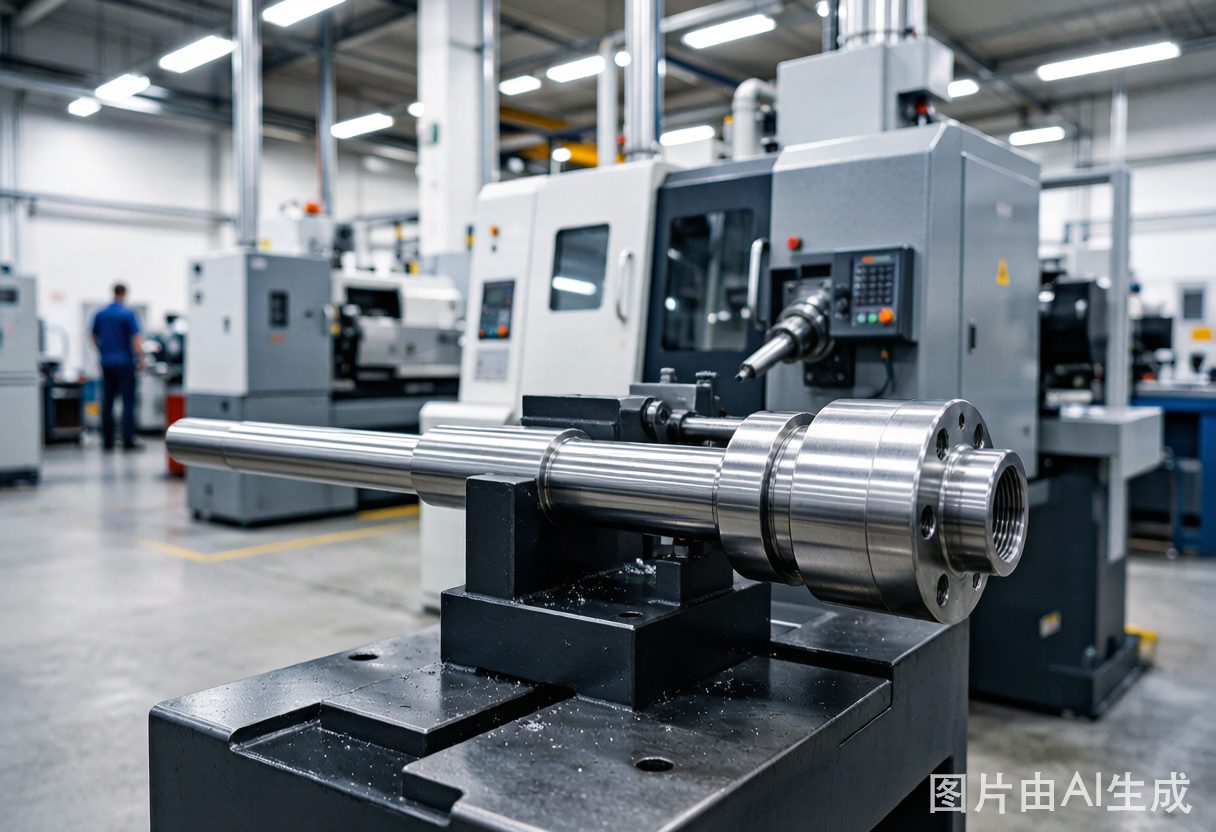
CNC machining of cylinder rods and tubes
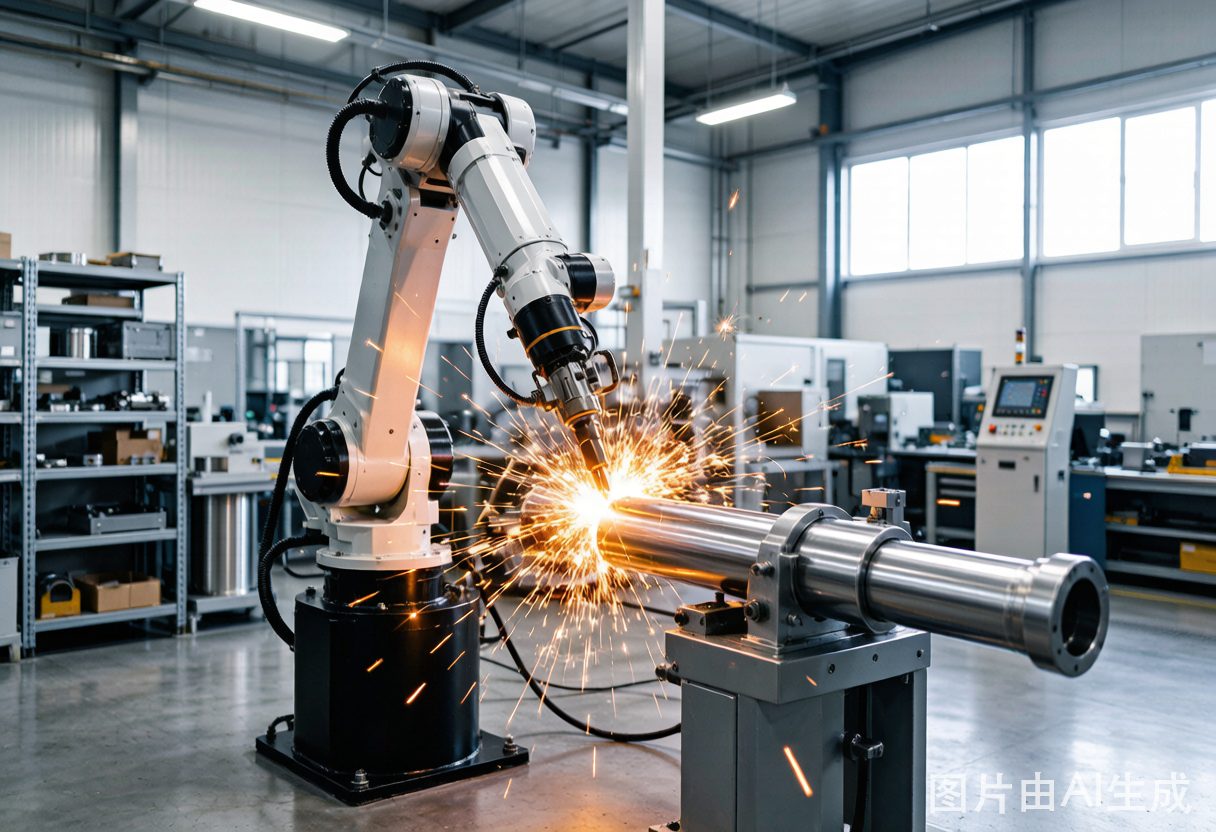
Robotic and manual welding cells
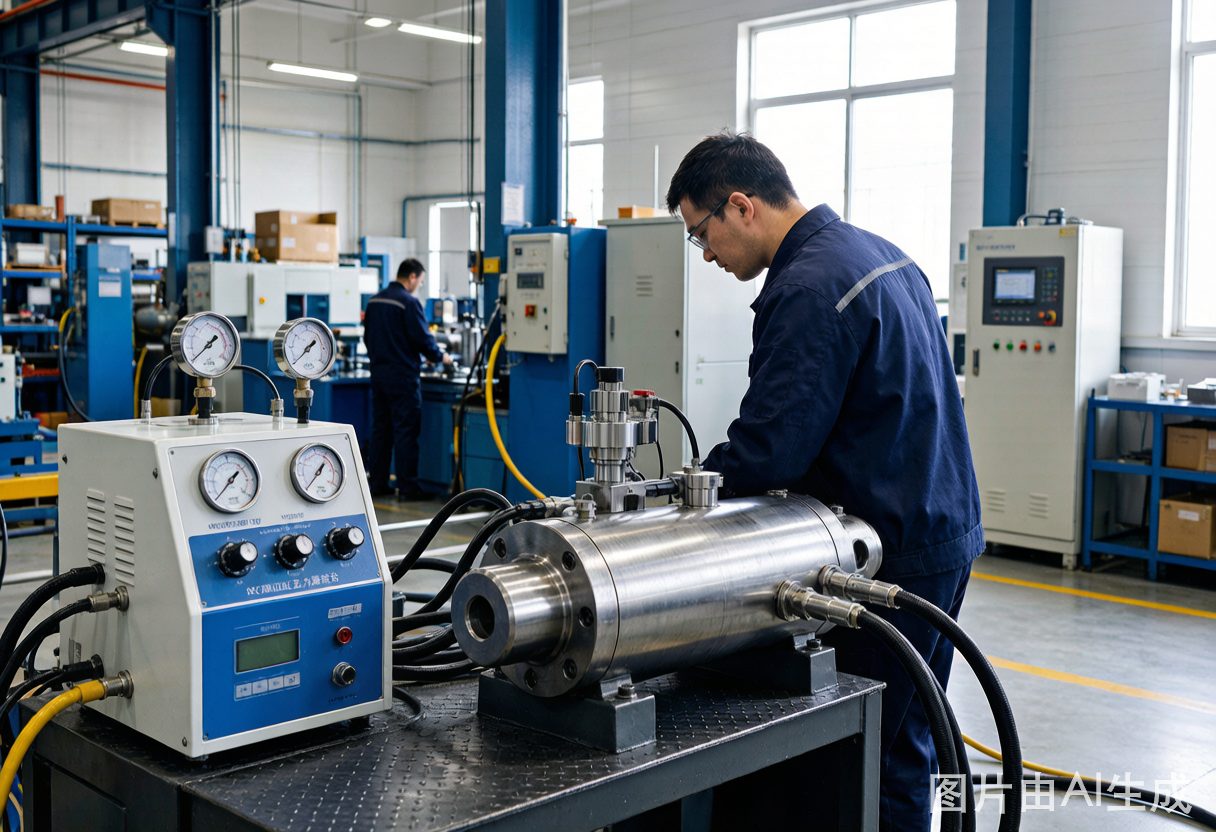
Full pressure test bench to rated bar
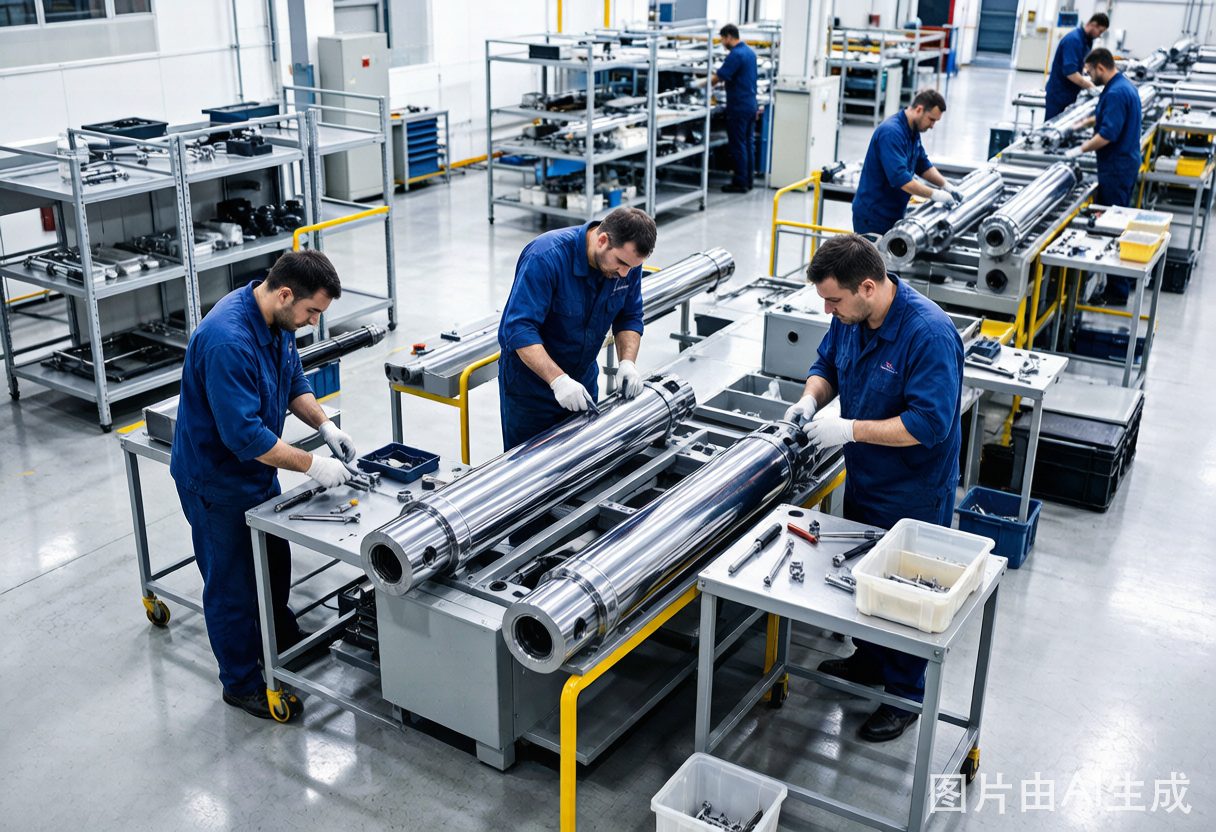
Dust-free assembly area